

Resilient Planning
Mobility
Guidelines for Resilient Urban Logistics Planning
Mission: Interreg Euro-MED Green Living Areas
Developed by: MED COLOURS
Contact: Centre for Research and Technology Hellas - CERTH Orestis Tsolakis ortsolakis@certh.gr
ETU Pillars:
Organisational EnvironmentalWhat is the solution?
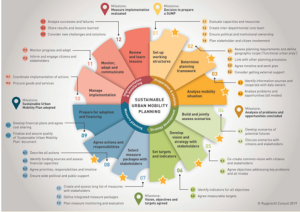
A methodological framework to help cities integrate climate resilience into Sustainable Urban Logistics Plans (SULPs). It combines innovation-readiness and planning assessments with practical guidance for identifying vulnerabilities, strengthening stakeholder cooperation, designing resilient logistics measures and establishing adaptive monitoring mechanisms. The approach supports more sustainable, reliable and adaptable urban freight systems.
What challenge does this solution address?
Urban logistics systems face increasing exposure to climate-related hazards, infrastructure disruptions, congestion and changing market conditions. Traditional Sustainable Urban Logistics Plans do not systematically operationalise resilience across their planning and implementation activities.
This framework addresses this gap by helping local authorities identify institutional, operational and infrastructural vulnerabilities, assess their capacity for innovation and incorporate resilience-oriented measures into urban logistics planning.
What is the added value?
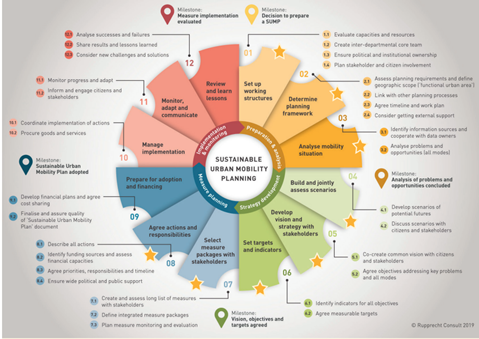
The main innovation lies in integrating resilience systematically into the existing Sustainable Urban Logistics Planning process. The framework combines an evidence-based, Two-Pillar diagnosis of innovation readiness and actual implementation performance with targeted adaptations to the established 12-step SULP cycle. It introduces foundational resilience standards, climate-risk-informed scenarios, assessments of the economic cost of inaction, adaptive monitoring triggers and post-disruption learning mechanisms. This enables cities to transform static planning documents into adaptive governance instruments that respond to emerging risks and evolving operational conditions.
Guidelines for Resilient Urban Logistics Planning
More from Resilient Planning
Mission: Climate-Neutral and Smart Cities
Low Emission Zone Implementation & Governance Capacity Building Program
More Details