
Community Engagement
Solution Tested:
CROWDVOCACY – Digital Platform for Citizen Participation in Co-Creating Green AreasWhy this pilot?
“Main Challenges / Needs Addressed by the Pilot
The pilot addresses the challenge of defining a sustainable and widely accepted future for the former Kodra Military Camp, a large urban area of significant historical and environmental value that has remained largely unused for many years. The main need is to transform the site into an open, accessible space that responds to the growing demand for green areas, cultural activities, and recreational opportunities in the densely urbanized metropolitan area of Thessaloniki. At the same time, the site is subject to heritage protection regulations and legal restrictions, which limit potential interventions and require careful planning. Another key challenge is ensuring that the redevelopment process reflects the needs and expectations of local communities. For this reason, the pilot focuses on participatory design and public engagement, encouraging citizens to contribute ideas and visions for the future of the area while integrating the principles of the New European Bauhaus: sustainability, aesthetics, and inclusion.
Reason for Selecting This Location
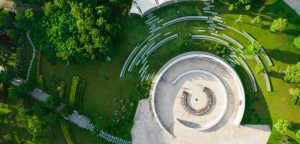
The former Kodra Military Camp was selected because it represents one of the largest remaining open spaces in the Municipality of Kalamaria and the wider metropolitan area of Thessaloniki. Covering more than 340 acres and located close to residential neighborhoods and the city center, the site has strong potential to become a major metropolitan park and public space. Its historical background as a former military base, combined with its panoramic views of the Thermaic Gulf, makes it a unique urban landscape with significant cultural and environmental value. Due to its size, strategic location, and ongoing public discussions about its future use, the area offers an ideal setting to test participatory planning approaches and to collect diverse ideas that can guide its long-term regeneration in a way that aligns with community needs and sustainability goals.”
What was done?
The pilot focused on engaging citizens and stakeholders in shaping ideas for the future use of the former Kodra Military Camp through a participatory and transparent process.
-Launch of an open call for proposals:
Citizens, local organizations, professionals, and institutions were invited to submit ideas for the future use of the former Kodra Camp through an online platform.
-Creation of a digital repository of ideas:
A public platform was developed to collect and present the proposals, allowing anyone to view and explore the ideas submitted for the area.
-Public voting process:
Citizens were able to vote for their preferred proposals online. In total, 81 proposals were submitted and 1,249 votes were recorded, showing strong public interest.
-Evaluation by the Local Green Transformation Node:
A group of experts representing local government, civil society, academia, the design sector, and businesses reviewed and categorized the proposals.
-Assessment based on clear criteria:
Proposals were evaluated according to the principles of the New European Bauhaus—sustainability, aesthetics, and inclusion—as well as their originality and feasibility.
-Development of a final repository of proposals:
The final catalog combined public voting (40%) and expert evaluation (60%), creating a balanced result that reflects both citizen preferences and professional assessment.
The repository will guide future planning and possible smaller interventions in the Kodra area.
What others can learn from this Pilot?
-High public interest matters:
The submission of 81 proposals and 1,249 votes shows that citizens are strongly interested in the future of important public spaces when they are invited to participate.
-Participation builds trust:
An open and transparent process helped residents and stakeholders feel included in the discussion about the future of the site.
-Citizens and experts together produce better results:
Combining 40% public voting and 60% expert evaluation created a balanced and fair system that considered both community preferences and professional feasibility.
-Consider diverse community needs:
Involving groups such as residents, children and youth, elderly people, people with disabilities, artists, researchers, and local businesses helps generate more inclusive and useful ideas.
-Clear principles guide decisions:
Using the New European Bauhaus principles—sustainability, aesthetics, and inclusion—helped structure the evaluation and direction of proposals.
-Keep the dialogue open:
Maintaining the platform open for additional ideas allows continuous participation and supports long-term cooperation in the regeneration of the area.